Physical Address
304 North Cardinal St.
Dorchester Center, MA 02124
Physical Address
304 North Cardinal St.
Dorchester Center, MA 02124

 Reuters
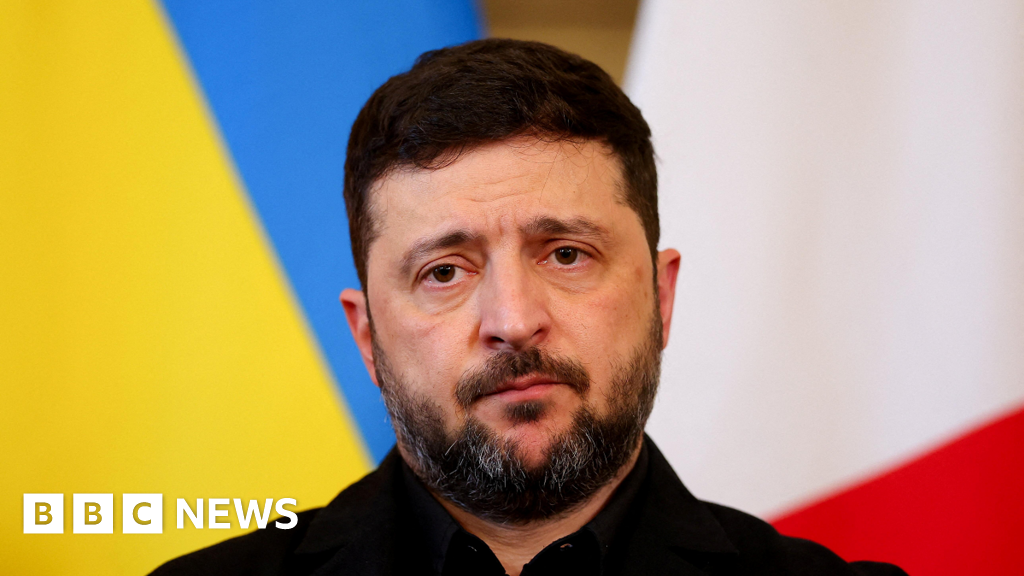
Ukrainian President Zelensky said that the United States recommended that Ukraine withdraw its troops from the eastern Donetsk region and establish a “special economic zone” in the area it currently controls.
Zelensky said that territory and control of the Zaporozhye nuclear power plant remained the two main unresolved issues in the Ukrainian peace plan proposal.
In a sobering briefing to reporters, Zelensky discussed the United States’ desire for a quick end to the conflict, the complexities of ongoing negotiations and his view that Russia has no intention of stopping the war.
Zelensky said Ukraine had sent the United States an updated 20-point plan and separate documents on security guarantees and provisions for Ukraine’s reconstruction.
It follows weeks of high-level diplomacy in which U.S., Ukrainian, Russian and European leaders developed, tweaked and revised peace plans.
“The last mile is the toughest. Everything can fall apart for many reasons,” Zelensky said Thursday.
Russia has demanded that Ukraine give up control of about 30% of the eastern Donetsk region it still holds, but Ukraine refuses to do so in principle because it fears it would give Moscow a foothold for future invasions.
Zelensky said the United States was now envisioning a solution that would see Ukrainian troops withdraw from parts of Donetsk, while Russian troops pledged not to advance into the area. Zelensky said the area would become a “special economic zone” or “demilitarized zone.”
However, he pointed out that it was unfair for Ukraine to unilaterally withdraw its troops and that Russia should also withdraw the same distance.
“What would stop (Russia’s) advance? Or stop infiltration disguised as civilians?” he asked.
Zelensky said these were “very serious concerns” and Ukraine might not accept the proposal at all – even as he opened the door to an election or referendum to give the Ukrainian people a choice.
But he acknowledged that fighting will continue and could affect the future of negotiations: “A lot depends on our troops – what they can control, where they can stop the enemy, what they can destroy. That affects the whole configuration.”
Zelensky said the management of the Zaporozhye nuclear power plant was another hotly contested issue.
The power plant, Europe’s largest, is located on the front line and has been under Russian control since March 2022.
Zelensky said one possible solution would be for Russia to withdraw its troops and Kiev share control of the plant with the Americans, although he acknowledged the details of such an arrangement remained unclear and it was doubtful Moscow would agree.
U.S. President Donald Trump appears frustrated by the complexity of the conflict, and Kyiv and its allies fear the United States may ultimately seek to impose a Russian-led solution on Ukraine.
Zelensky told reporters that while Americans wanted a “faster end” to the war, there was no deadline for reaching a deal.
Ukraine, which has been targeted almost nightly by widespread airstrikes, has been seeking respite and an immediate ceasefire ahead of a tougher deal.
But Russia stands to gain more from a delay in the ceasefire, as its troops continue to make small but incremental gains on the front lines and its attacks exhaust the Ukrainian population.
Zelensky said the United States was now aligned with Moscow on this position “after multiple rounds of talks with Russia.”
Kremlin officials are more secretive than their European, American and Ukrainian counterparts.
Whenever possible, however, Russia will try to give the impression that Moscow and Washington are aligned in their hopes for the terms of a peace agreement.
On Thursday, Russian Foreign Minister Sergey Lavrov praised Trump for trying to broker a deal and said a recent meeting in the Kremlin between President Vladimir Putin and U.S. envoy Steve Vitkov “cleared up misunderstandings” between the two sides.
The foreign minister also dismissed suggestions that security could be provided to Kiev in the form of foreign troops stationed in Ukraine.
“This is another return to the sad logic of Zelensky’s so-called peace plan,” Lavrov said, adding that Moscow had submitted “additional” proposals on collective security to the United States and that Russia was ready to provide legal guarantees not to attack NATO or EU countries.
But given Russia’s previous violations of ceasefires and ceasefires, neither Ukraine nor Europe is likely to accept any of Moscow’s commitments at face value.
European and Ukrainian officials want the United States to step in to provide security to prevent Kiev from becoming the target of a new wave of attacks.
Zelensky said he had received a draft proposal on U.S. security guarantees but that it was still in progress, suggesting that the U.S. proposal was not enough to allay Kyiv’s concerns.
“The United States does not want Ukraine to join NATO. They say so publicly…so I don’t think they have difficulty discussing NATO with Russia,” Zelensky said.
Zelensky also said Ukraine must be “cautious,” adding: “We don’t know what other agreements the United States might reach with Russia. We will learn in time.”
The Ukrainian president also acknowledged that U.S. support for Kyiv may one day end, both in terms of U.S. weapons sales through other countries and intelligence sharing.
“No one knows what will happen the day after tomorrow… We don’t know how these negotiations will end, reflecting the fraught nature of the negotiations and his doubts about whether Russia is negotiating in good faith,” Zelensky told reporters.