Physical Address
304 North Cardinal St.
Dorchester Center, MA 02124
Physical Address
304 North Cardinal St.
Dorchester Center, MA 02124

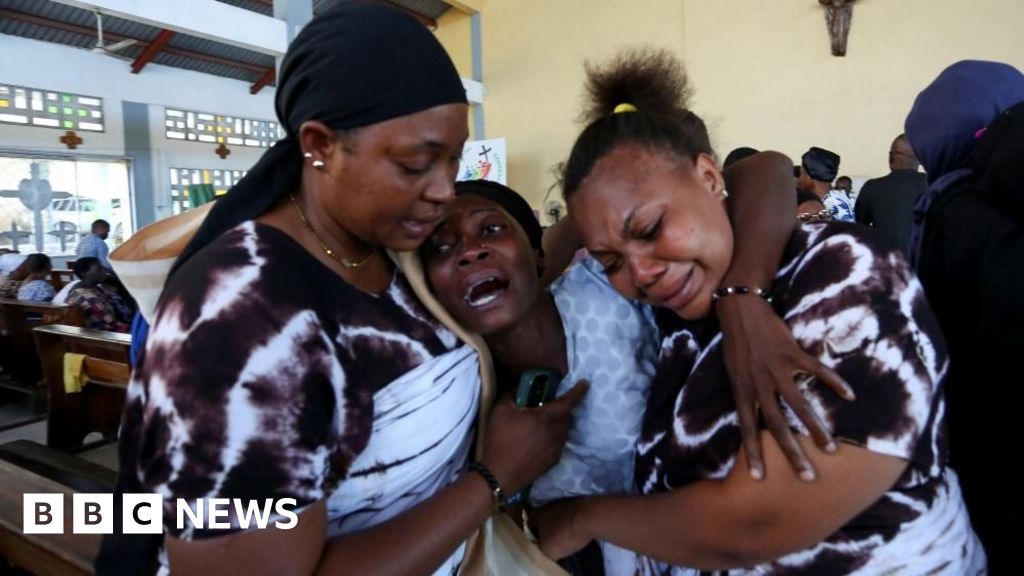
Western embassies in Tanzania, including Britain’s and France’s, have called on authorities to hand over all the bodies of those killed in October’s election violence to their families.
Citing “credible reports”, the 17 missions said there was “evidence of extrajudicial killings, disappearances, arbitrary arrests” and “hiding of bodies” by Tanzanian authorities during the unrest.
Tanzania has yet to comment, but just days ago President Samia Suluhu Hassan angrily lashed out at Western countries, accusing them of meddling in the country’s internal affairs.
Hundreds of people were reportedly killed in the violence, but the government has not released an official death toll.
Following the October 29 presidential election, in which President Samia was declared the winner with nearly 98% of the vote, the authorities violently suppressed widespread demonstrations.
Samia’s main rival was barred from participating, sparking widespread anger over the fairness of the presidential race, with the opposition denouncing it as a “mockery of democracy”.
Authorities also blocked the internet and threatened anyone who shared photos of the protests.
Samia defended the fairness of the election and dismissed criticism of his human rights record.
At least 240 people were charged with treason following the protests, but the president later sought to ease tensions and asked prosecutors for “leniency.” Many of those charged have reportedly been released.
Opposition leader Tundu Lissu was charged with treason in April and remains in jail.
In a joint statement on Friday, a coalition of Western embassies in Tanzania urged President Samia’s government to release political prisoners and allow detainees access to legal and medical help.
A statement issued by the EU delegation, several EU member states, Canada, Norway and Switzerland added: “We call on the authorities to urgently return the remains of all deceased persons to their families.”
They welcomed the government’s decision to investigate the causes and circumstances of the violence, but stressed that the investigation should be independent, transparent and inclusive, and involve civil society, faith-based organizations and political stakeholders.
They added: “We reiterate our call on the government to uphold its international commitments and protect the fundamental freedoms and constitutional rights of all Tanzanians to access information and express their opinions freely.”
The statement comes as Tanzania faces growing diplomatic pressure over reported human rights abuses during its disputed election.
Seif Magango, spokesman for the U.N. human rights office, told a news conference in Geneva on Friday that the Tanzanian government had “stepped up its crackdown on the opposition since the vote.”
Magango added: “Reports indicate that dozens of people, including academics, civil society actors and local political leaders, have been detained since mid-November, several allegedly by unidentified armed men.”
He said hundreds of people were reportedly killed and more than 2,000 detained in demonstrations that broke out after the election.
“We call for the immediate and unconditional release of all those arbitrarily detained.”
The U.S. government said on Thursday it was reconsidering its relationship with Tanzania after taking tough measures against protesters.
The U.S. State Department said the United States “cannot ignore actions that endanger the safety of our citizens or the security and stability of the region.”
In a defiant speech on Tuesday, President Samia argued that the use of force against protesters “prepared to overthrow the government” was “necessary”.
She again accused unnamed foreign actors of colluding with opposition groups to bring about “regime change,” but provided no evidence to support the claim.
Samia said her government was ready to confront protesters at new demonstrations next Tuesday.
The 65-year-old leader took office in 2021, becoming Tanzania’s first female president since the death of President John Magufuli.
She was initially praised for easing political repression, but the political space has since shrunk.




