Physical Address
304 North Cardinal St.
Dorchester Center, MA 02124
Physical Address
304 North Cardinal St.
Dorchester Center, MA 02124

─────────────────────────────────────────────────────────────────
0) Executive summary (the true story behind the case)
─────────────────────────────────────────────────────────────────
You currently have:
– The large long position in PAXG is equivalent to approximately 100% of the equity.
– Average attendance (Avg): 5397
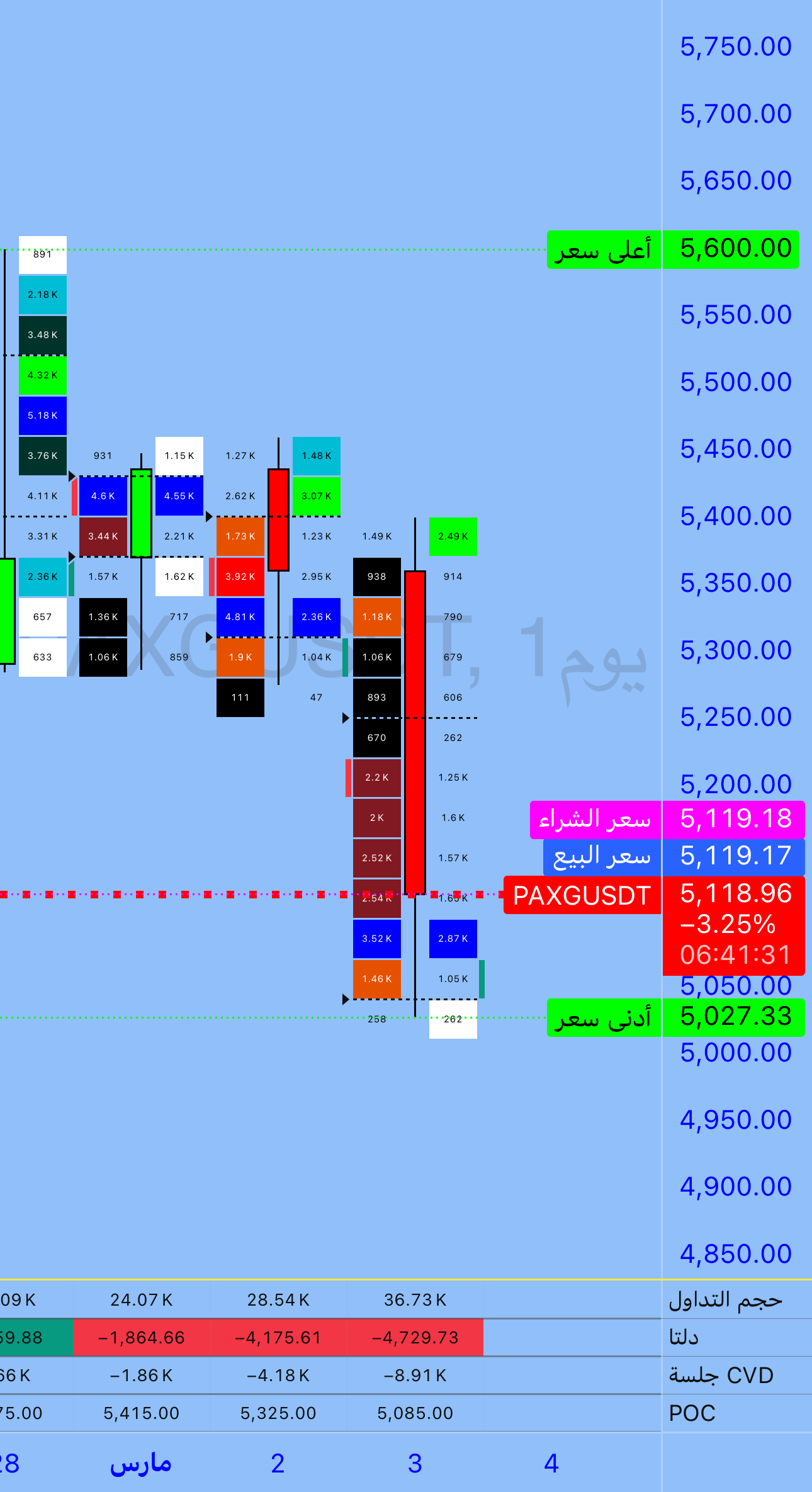
– Current price (according to watch screenshot): PAXGUSDT ≈ 5147.95
This is a “concentration issue + portfolio vulnerability”, not just “will gold go up or down?”
Key risk facts:
– Floating loss and average loss ≈ 5397 − 5147.95 = 249.05 (approximately -4.61%)
– To get back to breakeven from here, you would need a move of approximately +4.84%.
Objectives of the white paper:
– Transform the behavior of “supply everything under pressure” into a controlled operating plan:
(SL1 lightweight + SL2 tailgate)
+ Clear acceptance/withdrawal conditions
+ Implement step-by-step up the hierarchy (shelf).
─────────────────────────────────────────────────────────────────
1) Data summary (from your photos)
─────────────────────────────────────────────────────────────────
A) View cross-assets in footage
– DXY: 99.370 (Bullish)
– US10Y: 4.105 (Bullish) | US02Y: 3.555 (Bullish)
– VIX: 25.90 (strong rise)
– Indicators: SPX mostly flat, NDX up slightly, DJI down slightly
– Solid Nozzle Gold Forum: XAUUSD ~ 5132 (-3.56%)
PAXGUSD ~ 5148.69 (-3.94%)
Mechanical translation:
– Stronger USD + rising returns = gold is naturally under pressure.
– VIX rise + gold fall may still be a “liquidity event/deleveraging”
This means that people spend more money on cash (USD) than on gold in the short term.
B) Technical structure of tags in images (Ichimoku)
15 minutes (approximately):
– Price ~5151
– Cloud: Upper ~ 5248.35 | Lower ~ 5207.39
– Kijun ~ 5225.10 | Turn around ~ 5189.69
– Qikou~ 5163.45
– Low importance appearance: 5102.00
1 hour (approximately):
– Price ~5150
– Cloud: Upper ~ 5280.83 | Lower ~ 5251.00
– Kijun ~ 5271.57 | Turn around ~ 5230.42
– Qikou~ 5162.90
4 hours (approximately):
– Price ~5152
– Cloud: Upper ~ 5351.00 | Lower ~ 5315.91
– Kijun ~ 5351.00 | Turn around ~ 5280.83
– Qikou~ 5174.69
Additional information in the XAUMO box:
– Direction: Bear
– Recent Fib Reference: 50% @ 5212.20
– ATR(14): ~156.84 (~3.04%) (measurement unit of tension/vibration)
─────────────────────────────────────────────────────────────────
2) Definition of the problem
─────────────────────────────────────────────────────────────────
The question is not: “Will gold show up?”
question:
– Can the trade “withstand” the impact of reality (wx/spreads/liquidity) without causing account destruction?
At the same time, if there is a rebound, is there still room for maneuver?
100% internally owned:
– Without a cap, the “risk budget” is actually open to the bottom.
– Wide stop loss to avoid noise = it can be very harmful to the account.
Supply under stress increases vulnerability because:
(1) The size increases as the voltage increases
(2) Reduce cash flow
(3) Increase psychological attachment (sunk costs/upgrades)
─────────────────────────────────────────────────────────────────
3) Instrument risk (PAXG follows gold…but spot is not literally gold)
─────────────────────────────────────────────────────────────────
PAXG’s business risks:
– Platform risks (downtime/forced liquidation/margin rules)
– USDT settlement risk (liquidity/spread/slippage)
– 24/7 Trading: ‘Cryptocurrencies’ can shatter FX expectations
– Base/Track: Generally good, but under pressure it can expand
in conclusion:
– PAXG may have higher tail risk than “Theoretically, I’m a gold buyer.”
─────────────────────────────────────────────────────────────────
4) Loss distribution + compression test (number)
─────────────────────────────────────────────────────────────────
Now compared to the average:
– Average: 5397
– Current: 5147.95
– Difference: -249.05 (-4.61%)
Testing aside (illustrative example, not prediction):
– 5142 → -255 (-4.72%)
– 5102 → -295 (-5.47%) (Important shelf in the photo)
– 5057 → -339.7(-6.29%) (HTF/Cloud Architecture)
– 5021 → -375.9(-6.96%)
– 4979 → -417.7(-7.74%)
ATR test (ATR ~156.84):
– I placed 1×ATR ~5147.95 ≈ 4991.11
→ Difference from average ≈ -405.89 (-7.52%)
This explains why “All-in” remains unstable in high ATR environments.
─────────────────────────────────────────────────────────────────
5) Technical reading (comprehensive…but implementation is more important)
─────────────────────────────────────────────────────────────────
A) Who controls?
– 4 hours: Price well below the clouds (until above ~5351) = supply/pressure ceiling.
– 1 hour: Price is below the cloud for 1 hour (lower ~5251) = bearish system until recovery.
– 15m: Price below 15m cloud (lower ~5207) = any rise must remain above.
B) Meaning of “accept” (operational definition)
Acceptance is not “awakening.”
Acceptance means:
– Installation close to 15m+ above the shelf
– Then retest the catch (defend the frame)
Depending on your level:
– First acceptance rack: ~5207
– Then: ~5212 (50% Fib)
– Then: ~5230
– then: ~5251
– Then: ~5280
– Then: ~5315–5351
– Breakeven point: 5397
C) Simple translation
– “North” here = gradual recovery of 5207 → 5230 → 5251 (accepted).
– Otherwise = rotate under rotation/down control.
─────────────────────────────────────────────────────────────────
6) Governance gap (why this incident is more than just a transaction)
─────────────────────────────────────────────────────────────────
Transaction = Hosted Item.
Currently the project includes:
– No cap on equity-related losses
– No kill switch (obvious failure)
– No progressive mitigation policy (de-risking).
– No liquidity reserves to manipulate
From the perspective of institutional logic:
-You are an employee with “infinite shortcomings” and “limited quality of resolution” under pressure.
─────────────────────────────────────────────────────────────────
7) Option Strategy (Framework – Non-Order)
─────────────────────────────────────────────────────────────────
Option 1 – Risk Treatment (Option Recovery)
Goal: Reduce initial vulnerability and then re-plan.
+ Protect the tail, soothe the mind, and restore decision-making space
– Can recoup some losses, but requires discipline
Option 2 — Convert it to an investment (longer time horizon)
Goal: Accept drawdowns as part of long-term allocations.
+ Simple
– Fatal concentration still exists, PAXG’s operating risks, if the decline expands, it will be difficult to control
Option 3 – Hedging/Balancing
Goal: Maintain upside and cap downside (if you have a hedging instrument).
+ The tail has a border
– Complexity + Cost + Implementation Risk
General rules:
Which option should be kept:
– The maximum loss is a clear number
– Clear failed racks
– Non-emotional add-on policy (not “everything goes down, I get more”)
─────────────────────────────────────────────────────────────────
8) XAUMO execution diagram (MTF+SL1/SL2+TPq/TP2)
─────────────────────────────────────────────────────────────────
A) Permission rules
– 15m = permission/acceptance
– 5m = timing only
B) Shelf (simplified based on your photo)
Support frame (bottom):
-5102
-5057
– 5021 → 4979
Search rack (top):
-5207
-5212
-5230
-5251
-5280
– 5315–5351
– 5397 (balance)
C) SL protocol (concept)
– SL1 (Light): Stop “noise” only works if Assume = Rollback Immediately.
– SL2 (Tailgate): Catastrophic stop sets maximum acceptable damage.
Key logic:
SL2 is “substantial” if size = 100% equity, which means it must remain very narrow
To match the logical risk cap…this conflicts with the ATR ~3% environment.
This means: volume and stop loss must be coordinated with each other (one cannot exist without the other).
D) TP protocol (concept)
– TPq: Take first on the first recovery rack (to reduce risk/release stress).
– TP2: only after acceptance on a higher shelf (structural proof), not hopefully.
─────────────────────────────────────────────────────────────────
9) Decision tree (simple – oh, like that, oh like that)
─────────────────────────────────────────────────────────────────
Case A – Recovery is “validated”:
If 5207 or above 15m before (shutdown+install+reset)
Then there are the recovery steps:
5212→5230→5251 (every step must be accepted)
Risk: You can justify “holding management” because the structure is improving.
Case B – Rotation under downward control:
If acceptance fails above 5207 and price goes below it every time
Markets still ‘spinning under the aegis of HTF’
Risk: The possibility of shocks continues, with tail priority being higher than the trend.
Scenario C — Bearish Breakout/Continuation:
So 5102 is broken, accept below it (no problem)
Keep the following shelves:
5057 → 5021 → 4979
Risk: The focus becomes existential and governance must take precedence over opinion.
─────────────────────────────────────────────────────────────────
10) Risk control (minimum institutional requirements for the retail industry)
─────────────────────────────────────────────────────────────────
1) Maximum loss policy:
– Determine the maximum loss (percentage of equity) for “this idea”.
– No numbers = no control.
2) Liquidity reserve policy:
– Presence of “Khov” grid; ten “options”.
Choice prevents retaliation and enforces averageness.
3) Bonus policy:
– No additions allowed unless:
(a) Modified admission requirements
or
(b) Grid diagram with known upper limit of total loss
– “Added because it went down” = bias, not planning.
4) Time policy:
– No new decisions during volatility/spread jumps.
– Check 15m off… instead of 1m mood.
─────────────────────────────────────────────────────────────────
11) Successful outcome (what does this “successful” situation mean?)
─────────────────────────────────────────────────────────────────
Success is not “I’ll get back to breaking even.”
success:
– Turn an emotional all-in trade into a controlled trade:
– Clear loss cap
– List + accept/withdraw
– SL1/SL2 are proportional to size
– Risk-reducing TPq
– No chasing/FOMO execution




